
Many homeowners considering a traditional listing also look at cash offers. Searches for “house for cash near me,” “cash for houses,” or “cash offer on house” often come from people who want a faster process, fewer repairs, or more certainty about closing. Understanding how cash buyers typically price a property can help you compare options more clearly.
This guide explains common pricing approaches, the main types of cash buyers, ways to estimate your home’s value, practical warning signs, and a simple step-by-step overview of a cash sale. It is for general information only and is not financial, legal, or real-estate advice.
How Cash Buyers Often Calculate an Offer
Many local cash buyers use a variation of this approach:
After-Repair Value (ARV) × a percentage – estimated repair costs = offer
For illustration only: if a home might sell for about $300,000 after repairs and needs roughly $40,000 of work, a buyer using a 70% factor might start near $170,000 ($300,000 × 0.70 − $40,000). The percentage can vary (for example 65%–75%) depending on the market, property condition, competition, and the buyer’s costs and risk.
That discount is intended to cover holding costs, closing costs, repairs, and the buyer’s margin. It does not mean a cash offer is always better or worse than listing with an agent — the net result depends on commissions, repairs, carrying costs, time on market, and whether a financed deal would close.
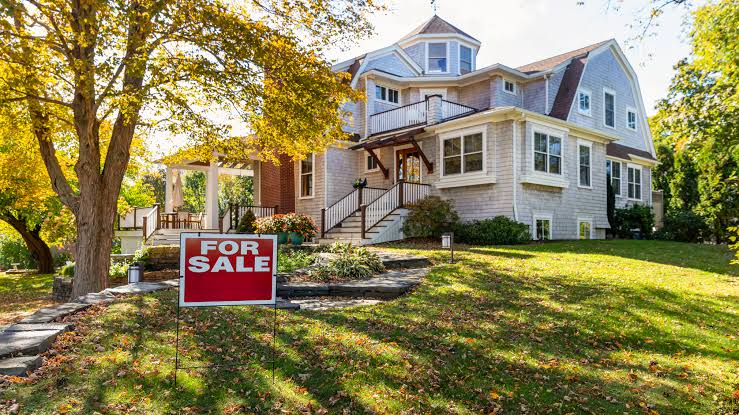
Typical cost factors people compare include:
- Agent commissions: Often several percent of the sale price on a traditional listing; usually not charged by a pure cash buyer.
- Repairs and updates: Often paid by the seller before or during a retail sale; many cash sales are as-is.
- Carrying costs: Mortgage, taxes, insurance, and utilities while the home is listed; a faster cash close can reduce these.
- Financing risk: Some financed purchases fall through; a verified cash offer can reduce that uncertainty.
- Time to close: Traditional sales often take longer; cash closings are frequently measured in days or a few weeks when title is clear.
Net proceeds can differ widely. A higher list price does not always produce a higher net if repairs, fees, and delays are large. A lower cash price may still leave more in your pocket in some situations — and less in others. Running both scenarios with realistic numbers is the practical way to compare.
Common Types of Cash Buyers
Not every “cash for houses” company works the same way:
- “We buy houses” companies and flippers: Often buy in any condition, factor in repairs, and aim for a margin. Offers may land well below full retail value. Useful when speed and as-is condition matter most; watch for pressure tactics and very low offers.
- iBuyers: Algorithm-driven buyers that may price closer to market value and charge a transparent service fee. More selective about condition and location.
- Local investors: Independent buyers in specific areas. Can sometimes close very quickly; capital and reliability vary, so proof of funds and a solid contract matter.
Getting more than one written offer and comparing price, timeline, contingencies, and proof of funds gives a clearer picture than relying on a single number.
Estimating Your Home’s Value Before You Decide
Before responding to any cash offer, it helps to have an independent sense of value:
- Online estimates: Automated tools can give a quick range. Accuracy varies and is often lower for off-market or unique homes.
- Agent comparative market analysis (CMA): Many agents provide a free CMA based on recent local sales. Often more grounded in current listing and sold data.
- Professional appraisal: Highest formal accuracy in many cases, but usually paid and takes longer.
None of these replaces a negotiated contract or professional advice. They only help you judge whether an offer is in a reasonable range for your situation.
Warning Signs to Watch For
Most cash-home buyers operate within normal business practices, but caution is still warranted:
- No clear proof of funds (bank letter or equivalent).
- Pressure to sign the same day without time to review or consult someone you trust.
- Requests that you pay fees upfront to receive an offer.
- Only verbal promises instead of a written contract.
- Little or no verifiable business presence (reviews, registrations, physical address).
- Unclear assignment language that would let the buyer transfer the contract without your informed consent.
A legitimate process leaves room to read the contract, verify funds, and walk away if the terms do not fit your needs.
A Simple Outline of a Cash Sale Process
If you move forward with a cash offer, the sequence often looks like this:
- Estimate value using an online tool, CMA, or appraisal.
- Contact one or more cash buyers and share basic property details.
- Receive written offers and compare price, closing date, and contingencies.
- Ask for proof of funds.
- Review the purchase agreement carefully (or have a professional review it).
- Complete title work so liens and ownership issues are identified.
- Sign closing documents and transfer the deed as agreed.
- Receive proceeds according to the settlement statement, often shortly after closing when funds are cleared.
A cash sale is usually about speed, certainty, and reduced preparation — not automatically about the highest possible price. Knowing how offers are often built, comparing net outcomes, verifying the buyer, and reading the contract carefully puts you in a stronger position to decide whether a cash path fits your goals.
This article is for general educational purposes only. It is not a recommendation, appraisal, or offer to buy or sell real estate. Market conditions, costs, and outcomes vary by location and property. Consider consulting a licensed real estate professional, attorney, or tax advisor before making decisions.

