
I was a single mom working double shifts at a diner, barely making rent. Nursing school felt like a dream I could never afford. Then I found free online nursing courses I could study after my daughter fell asleep — and I earned my nursing assistant certificate in six months.
If you’re searching for “online nursing programs,” “free online nursing courses with certificate,” or “nursing assistant programs,” you already know the barrier. Traditional nursing school can cost $40,000 or more, and daytime classes don’t fit a real schedule. The good news: free and low-cost online options exist that can help you explore the field, earn certificates, or move toward a licensed role — without taking on massive debt first.
Free Online Nursing Programs: Where to Start
Several platforms offer free online nursing and healthcare courses. These can help you test interest, build foundational knowledge, or earn continuing education credit. They are not full RN degrees, but they are useful first steps.
- Care Relationships (Open University OpenLearn) — Communication and care relationships. Free. Best for beginners exploring nursing.
- Nursing Home Infection Prevention (CDC) — Infection control in long-term care. Free. Best for specialized training.
- Diet Therapy (Alison) — Basic nutrition in patient care. Free. Best for building a nursing studies foundation.
- Planetary Health for Nurses (Yale on Coursera) — Sustainable healthcare practices. Free to audit. Best for current nurses.
- Career 911 (Northwestern on Coursera) — Healthcare career guidance. Free to audit. Best for aspiring healthcare workers.
Use these to confirm the field fits your life before you pay for a certificate or degree program.
How to Find Online Nursing Programs Near You
When you search “online nursing program near me,” follow a practical order:
- Check your local community college — Many offer online or hybrid RN-to-BSN and LPN-to-RN options at lower cost than four-year universities.
- Look for state-based or resident discounts — Some states partner with online universities that reduce tuition for residents.
- Confirm accreditation — Search CCNE or ACEN databases so employers and state boards will recognize the program.
- Ask about clinical placement — Even fully online didactic courses usually require in-person clinical hours. Confirm the school can place you near where you live.
Online Nursing Paths: Types and Typical Timelines
- CNA (Certified Nursing Assistant) — Often 4–12 weeks. Some theory online plus required in-person clinicals. Fastest common entry into paid patient care.
- LPN / LVN (Licensed Practical / Vocational Nurse) — Typically 12–18 months. Hybrid options exist. Faster path than RN with solid job demand.
- 6-Month Nursing Assistant / Specialist certificate — About 6 months. Online coursework plus clinical externship. Aimed at certification readiness.
- RN-to-BSN bridge — Often 1–2 years. Widely available fully online for working RNs.
- MSN (Master of Science in Nursing) — Usually 2–3 years. Online and hybrid options for advanced practice or leadership roles.
Timelines and formats vary by school and state. Always verify current requirements with the program and your state board of nursing.
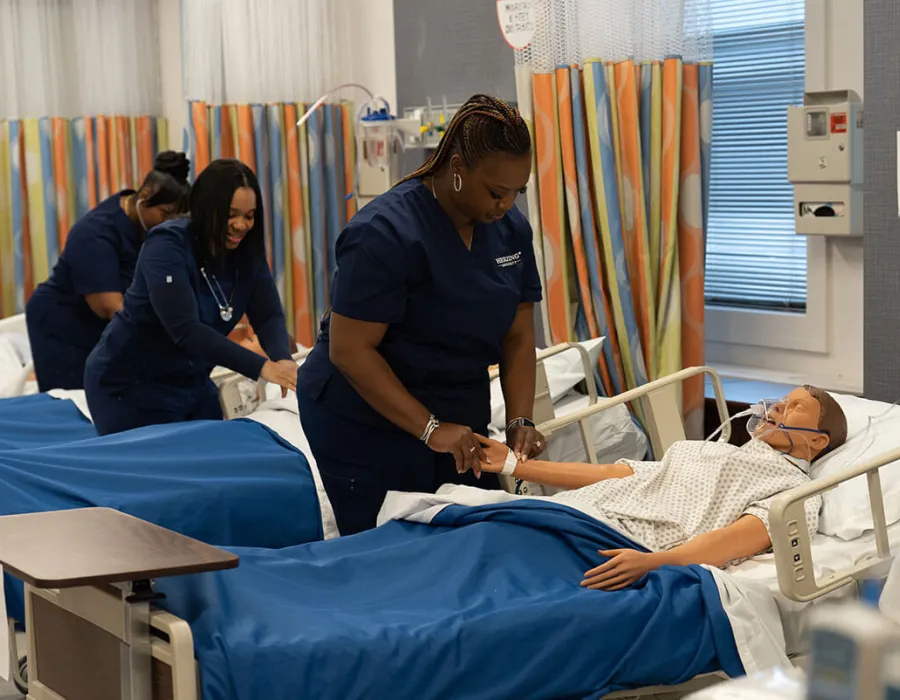
Free or Low-Cost 6-Month Nursing Assistant Routes
Several routes can reduce or eliminate tuition for CNA-level training:
- Career Online High School (through some public libraries) — Combines an accredited high school diploma with a healthcare career certificate in participating locations.
- Job Corps — Free CNA training at many Job Corps centers nationwide. High school diploma or equivalent is typically required. Confirm current eligibility and locations.
- State- and grant-supported local programs — Some schools and health systems offer evening/weekend CNA classes with clinicals; grants or employer sponsorship can cover cost for qualifying students.
- Health system free CNA programs — Certain hospital systems run free CNA training that includes classroom hours plus supervised clinical experience and meets state/federal requirements.
Availability, eligibility, and “free” status change by location and funding year. Always confirm directly with the provider.
What a 6-Month Nursing Assistant Specialist Path Often Includes
Programs marketed as a Nursing Assistant Specialist certificate commonly combine:
- Hundreds of contact hours of online coursework
- A clinical externship in a real healthcare setting
- Mentor or instructor support during the course
- In some cases, coverage of the national or state certification exam fee
Some schools offer interest-free monthly payment plans. Read the full cost, refund policy, and clinical requirements before enrolling.
CNA vs. CCMA: Quick Comparison
- CNA (Certified Nursing Assistant) — Typically 4–12 weeks. Cost often $0–$1,200 depending on grants and location. Focuses on bedside patient care in nursing homes, hospitals, and similar settings.
- CCMA (Certified Clinical Medical Assistant) — Often around 6 months. Cost often $0–$3,999 depending on funding. Emphasizes clinical and administrative tasks in outpatient and physician-office settings.
Choose based on the work environment you want and the employers hiring near you, not only the shortest timeline.
How to Move Toward a Nursing Credential Online: Step-by-Step
Step 1: Choose your entry point
CNA and LPN paths are usually faster and lower cost. RN and BSN paths generally open higher pay and more career options.
Step 2: Verify accreditation
Employers and licensing boards look for recognized accreditation (for example CCNE or ACEN for many nursing degree programs).
Step 3: Test the field with free courses
Use free modules to confirm interest and study habits before paying for a full program.
Step 4: Apply for financial aid where eligible
Complete the FAFSA. Many online and hybrid programs participate in federal aid. Also ask about state grants, employer tuition help, and scholarships.
Step 5: Plan clinical hours early
Online theory does not replace required hands-on clinical experience. Confirm placement options and state rules.
Step 6: Complete licensing requirements
CNAs follow state certification processes. LPNs take the NCLEX-PN; RNs take the NCLEX-RN. Requirements differ by state.
Is an Online Nursing Path Right for You?
Online and hybrid formats reward self-discipline and clear scheduling. They are not ideal for everyone.
Online or hybrid may fit if:
- You work and have family responsibilities
- You already have a degree or solid work history and want a structured transition
- You have reliable internet and a consistent study space
- You can manage independent study between clinical days
A more traditional format may fit if:
- You need frequent in-person accountability
- You prefer a full campus routine
- You are just out of high school and want built-in structure
Free courses and low-cost certificates can open the door. Full licensure still requires meeting your state’s education, clinical, and exam rules. Always confirm current requirements with the program and your state board of nursing.
Your 5-Step Action Plan
- Try one free course this week — Alison, OpenLearn, Coursera, or CDC modules are practical starting points.
- Research accredited programs — Use CCNE/ACEN lists and your community college first.
- Submit the FAFSA and ask about grants — Aid can apply to many online and hybrid options.
- Start with CNA or a short certificate if you need income sooner — Many people work while continuing toward LPN or RN later.
- Map the license steps for your state — Exam, background check, and application timelines matter as much as the coursework.
You do not need $40,000 and four years on campus to take the first step into nursing. Free online courses and lower-cost certificate paths can help you test the field and build credentials around a real work and family schedule. Start with one free course, confirm accreditation and clinical requirements, and move only as far as your time and budget allow. This article is for general information only. Program costs, eligibility, timelines, and licensing rules vary by school and state and can change. It is not a guarantee of admission, funding, certification, or employment.
```
